 Merken
 There's something about the smell of toasted sesame oil hitting a hot pan that instantly transports me back to a tiny noodle shop tucked away in Bangkok, where the owner's daughter taught me that the secret to a perfect peanut bowl isn't in following rules—it's in tasting as you go. Years later, I recreated that magic in my own kitchen on a sweltering summer afternoon when I had nothing but pantry staples and a craving for something cold, bright, and completely satisfying. This bowl has since become my go-to when I need to feel like I'm traveling without leaving my apartment.
I made this for my coworker Maya on a chaotic Tuesday when she mentioned she'd been eating sad desk salads all week, and watching her face light up when that first forkful of noodles coated in peanut sauce hit her tongue was worth every minute of prep. She's now made it three times, texting me photos each time to ask if she's doing it right, which somehow makes me feel like I've started a tiny underground noodle revolution.
Ingredients
- Rice noodles or wheat noodles (300 g): Rice noodles stay delicate and absorb the dressing beautifully, though wheat noodles give a heartier bite if that's your preference.
- Carrot, julienned: The sweetness balances the savory dressing, and the thin cuts mean they stay crisp even when tossed.
- Red bell pepper, thinly sliced: This adds a gentle crunch and a pop of color that makes the bowl feel alive.
- Red cabbage, shredded (1 cup): Its slight bitterness is a perfect counterpoint to the sweet-savory peanut sauce.
- Scallions, thinly sliced: Slice them just before serving so they retain that sharp, fresh bite.
- Fresh cilantro leaves (1/2 cup): If cilantro tastes like soap to you, parsley works beautifully—no judgment here.
- Bean sprouts (1/2 cup): These are optional but they add a texture that feels luxurious without being heavy.
- Creamy peanut butter (1/3 cup): Use the kind with just peanuts and salt; the natural oils are what make the dressing silky.
- Soy sauce (2 tbsp): Tamari is your friend if gluten needs to stay off the table.
- Sesame oil (1 tbsp): A little goes a long way—toasted sesame oil is non-negotiable for that deep, nutty flavor.
- Rice vinegar (1 tbsp): This brightens everything without being aggressive about it.
- Honey or maple syrup (1 tbsp): Either works; maple syrup keeps it fully vegan if that matters to you.
- Fresh ginger, grated (1 tsp): Microplane it if you have one—the texture matters more than you'd think.
- Garlic clove, minced (1 small): Don't skip this; it's the quiet backbone that makes people ask for the recipe.
- Warm water (2–4 tbsp): Add it gradually so the dressing ends up silky, not separated and sad.
- Roasted peanuts (2 tbsp), roughly chopped: The chunkiness gives every bite a little something to hold onto.
- Toasted sesame seeds (1 tsp): A sprinkle of these costs almost nothing but changes everything about how the bowl tastes.
- Lime wedges: These are not optional—they're the finale that makes people understand why this bowl matters.
Tired of Takeout? 🥡
Get 10 meals you can make faster than delivery arrives. Seriously.
One email. No spam. Unsubscribe anytime.
Instructions
- Get your noodles ready:
- Bring a pot of salted water to a rolling boil, add the noodles, and cook until they're tender but still have a slight resistance when you bite them. Drain them immediately and run them under cold water while stirring gently with your fingers so they don't clump together—this is crucial.
- Build the dressing:
- In a medium bowl, whisk the peanut butter, soy sauce, sesame oil, rice vinegar, honey, ginger, and garlic together until they're mostly combined, then slowly add the warm water while whisking. Stop when the dressing looks like liquid silk—thick enough to cling to noodles but thin enough to pour.
- Assemble your vegetables:
- Julienne or thinly slice everything and set it on a clean cutting board; having it prepped and ready means assembly becomes almost meditative instead of frantic.
- Bring it all together:
- Toss the cooled noodles with all the vegetables in a large bowl, then pour the dressing over everything and toss until every strand of noodle is coated. Taste it—this is when you adjust seasoning or add more water if it feels too thick.
- Plate and finish:
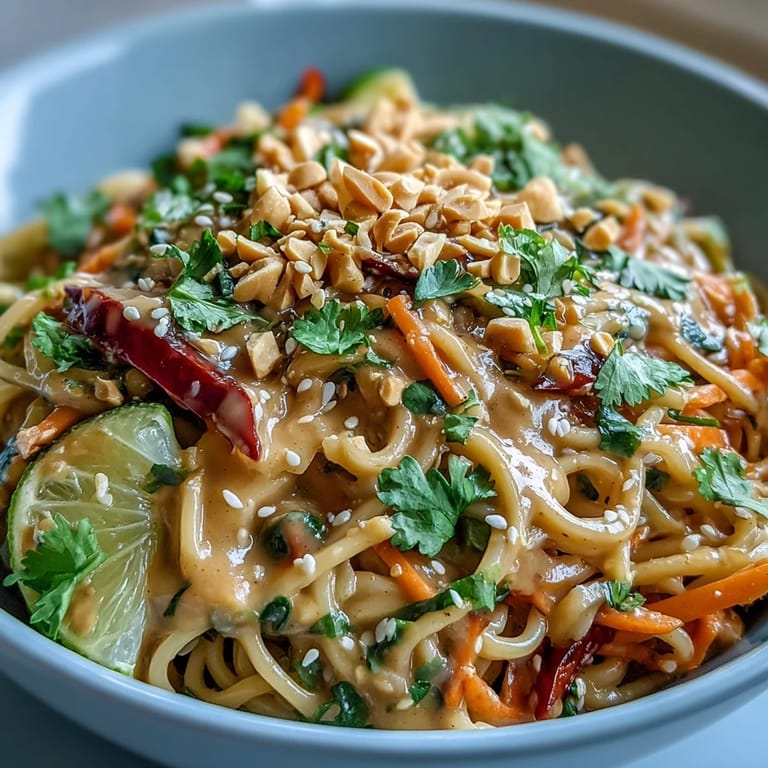
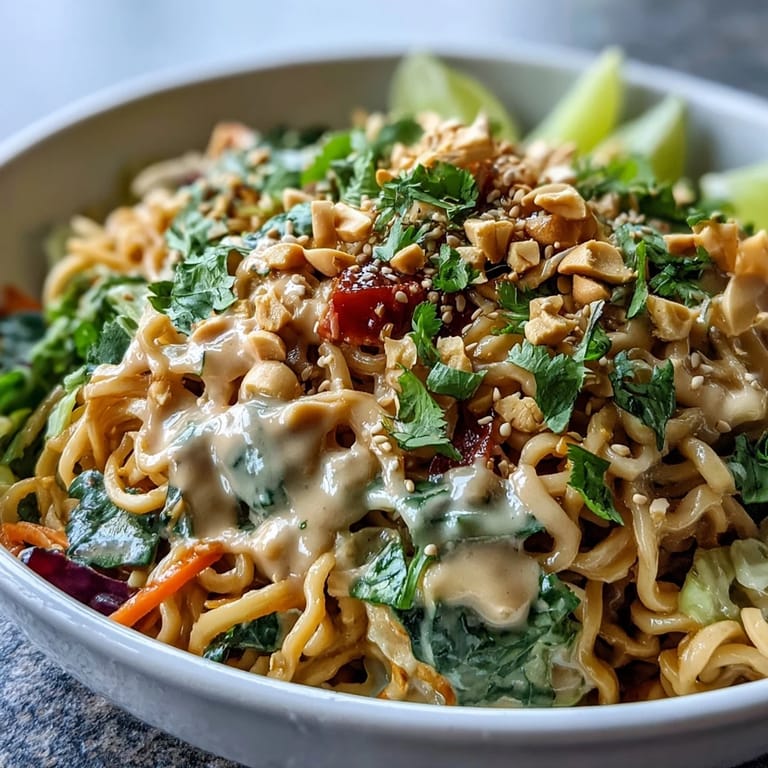
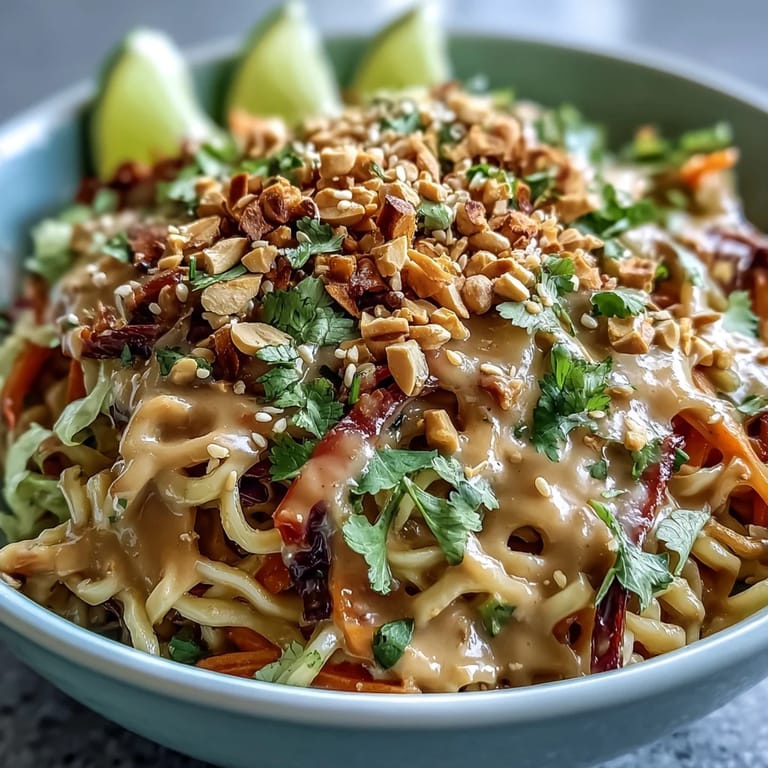
- Divide the noodle mixture among bowls or plates, top with the chopped peanuts, sesame seeds, and a small handful of fresh cilantro, then serve with lime wedges on the side. Squeeze a little lime over everything before eating—it's the moment when all the flavors finally make sense together.
 Merken
 My partner came home to find me standing in the kitchen at 9 PM on a random Wednesday, just quietly eating a bowl of these noodles straight from the pot while reading old emails on my phone, and instead of thinking I'd lost it, they asked if there was enough for two. We ended up sitting on the counter in comfortable silence, and somehow that felt like the moment this recipe became more than just food—it became permission to have something simple and good without any particular reason or occasion.
Cold Versus Warm
The beauty of this bowl is that it genuinely works at any temperature, though the experience changes depending on which you choose. Cold, it's refreshing and bright—perfect for hot days when you want something that feels light but keeps you satisfied through an afternoon. Warm, the noodles soften just slightly and the dressing clings differently, becoming almost creamy in a way that feels more comforting when the weather turns.
Making It Your Own
I've made this bowl with crispy tofu torn into bite-sized pieces, with grilled chicken sliced thin, with barely-cooked shrimp that stayed tender because the cold noodles cooled them down immediately, and every version felt like I'd invented something brand new. The foundation is solid enough to hold whatever your kitchen has available or whatever you're craving that particular day. Think of the recipe less as law and more as a very friendly suggestion from someone who's already figured out what works.
Storage and Next-Day Magic
This bowl actually tastes better the next day, which almost never happens—the flavors settle into each other and somehow taste more mature and interesting by morning. Keep the dressing separate from the noodles and vegetables if you're planning ahead, and when you want to eat it, warm the noodles gently under running hot water for 30 seconds, add a fresh drizzle of dressing, and top with newly chopped cilantro and peanuts so they stay crisp.
- Store noodles and vegetables in an airtight container in the refrigerator for up to three days.
- Keep the dressing in a separate jar and shake it well before using, as ingredients separate slightly when it sits.
- Toppings like peanuts and sesame seeds should always be added fresh right before eating so they don't go soft.
 Merken
 This bowl has become my reliable friend—the one you call when you need something beautiful and nourishing without drama or fuss. Make it once and it becomes part of your regular rotation, I promise.
Fragen & Antworten zum Rezept
- → Kann ich die Nudelschale vegan zubereiten?
Ja, ersetzen Sie einfach Honig durch Ahornsirup und verwenden Sie Tamari anstelle von Sojasauce für eine vollständige vegane Version.
- → Wie lange bleibt die Erdnussnudelschale frisch?
Im Kühlschrank aufbewahrt hält sich die Nudelschale 3-4 Tage. Bewahren Sie das Dressing getrennt auf, um die Nudeln vor dem Aufquellen zu schützen.
- → Welche Nudelsorte eignet sich am besten?
Reisnudeln sind traditionell und glutenfrei. Weizennudeln oder Udon-Nudeln bieten eine bessere Textur und mehr Bissfestigkeit für dieses Gericht.
- → Wie kann ich mehr Protein hinzufügen?
Gegrillter Tofu, Hähnchenbrust oder Garnelen passen hervorragend dazu. Fügen Sie etwa 100-150 g Protein pro Portion hinzu für eine vollständigere Mahlzeit.
- → Ist das Dressing scharf?
Das Basis-Dressing ist mild und cremig. Für Schärfe fügen Sie Chiliflocken, Sriracha oder frischen Chili nach Geschmack hinzu.
- → Kann ich das Dressing im Voraus zubereiten?
Das Erdnussdressing hält sich im Kühlschrank bis zu einer Woche. Vor dem Gebrauch gut umrühren und eventuell etwas Wasser hinzufügen.