 Merken
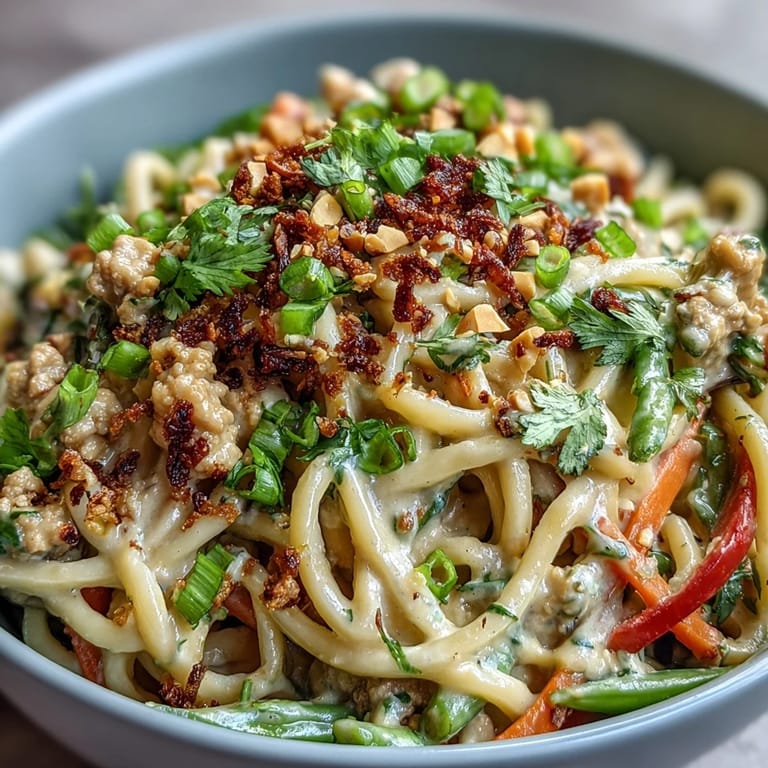
 One Tuesday evening, my neighbor stopped by with a bottle of wine and mentioned she'd been craving Thai food but couldn't justify another takeout order. Within an hour, we had this creamy peanut noodle bowl simmering on my stovetop, and she kept circling back to the kitchen just to breathe in the aroma of ginger and toasted sesame oil. What struck me most wasn't the speed—though 40 minutes total is genuinely impressive—but how the noodles absorbed every drop of that luscious sauce, turning what could've been just another weeknight dinner into something that felt intentional and special.
I made this for my sister after she mentioned feeling overwhelmed by cooking during exam week. Watching her face light up when she tasted how the noodles had soaked up every bit of that creamy, tangy sauce—that's when I realized this recipe isn't just convenient, it's genuinely comforting in a way that matters.
Ingredients
- Ground chicken (1 lb): It breaks apart beautifully as it cooks and absorbs the sauce like a sponge, but don't overcrowd the pan or it'll steam instead of brown.
- Dried wide rice noodles (10 oz): These are the secret to the potsticker technique—they soften directly in the sauce rather than needing a separate pot of boiling water, and they hold their slight chew perfectly.
- Red bell pepper: The thin slices stay crisp-tender and add a natural sweetness that balances the umami of the soy and hoisin.
- Shredded carrots (1 cup): Buy them pre-shredded if you're short on time; they cook just enough to lose their raw edge while keeping their crunch.
- Snap peas (1 cup): These are non-negotiable for the subtle pop they give with each bite—add them after the bell pepper so they don't overcook.
- Green onions: Split them into white parts (for sautéing) and green parts (for garnish) to get both the aromatic bite and fresh finish.
- Garlic and ginger (2 cloves and 1 tbsp): Fresh is worth the effort here; they're your flavor foundation and only need a minute to bloom.
- Creamy peanut butter (1/3 cup): Use the natural kind if possible—it whisks more smoothly and the sauce feels less heavy.
- Low-sodium soy sauce and hoisin: Together they create that deep, savory backbone without making the dish one-note salty.
- Rice vinegar (2 tbsp): This brightness cuts through the richness and keeps every bite from feeling heavy.
- Honey or maple syrup: Just enough to round out the edges of the sauce and let the peanut flavor shine through.
- Toasted sesame oil (1 tbsp): Don't skip this or substitute; it's the ingredient that makes people ask what's that incredible smell coming from your kitchen.
- Sriracha or chili garlic sauce: Start with 1 teaspoon and adjust—this is your personal heat dial, and everyone's preference is different.
- Chicken or vegetable broth (1.5 cups): Low-sodium gives you control over the final salt level, and the liquid is what transforms everything into that creamy consistency.
- Lime juice: Squeeze it fresh right before serving to keep that citrus brightness alive against the warm, rich sauce.
- Roasted peanuts, cilantro, and lime wedges: These aren't optional toppings—they're the final act that makes each bowl feel like something you'd order at a restaurant.
Tired of Takeout? 🥡
Get 10 meals you can make faster than delivery arrives. Seriously.
One email. No spam. Unsubscribe anytime.
Instructions
- Brown the chicken first:
- Heat a drizzle of oil in your skillet over medium-high heat and add the ground chicken, breaking it apart with a spoon as it cooks. You want it golden and cooked through in about 5 minutes—don't crowd the pan or you'll end up steaming it instead of getting that light browning that adds depth.
- Build your aromatic base:
- Once the chicken is done, push it to the side and add minced garlic, grated ginger, and the white parts of the green onions directly to the hot pan. Let them sizzle for just 60 seconds until the kitchen smells like a Thai restaurant.
- Add your vegetables in stages:
- Toss in the bell pepper, carrots, and snap peas, stirring occasionally for 2 to 3 minutes. You're looking for them to soften just slightly while keeping their personality—they should still have a little resistance when you bite down.
- Nestle the dry noodles in:
- Spread the uncooked rice noodles evenly over the top of everything in the pan. This might look chaotic and almost wrong, but trust the process—the noodles will soften directly in the sauce.
- Make your sauce smooth and silky:
- In a separate bowl, whisk together the peanut butter, soy sauce, hoisin, rice vinegar, honey, sesame oil, sriracha, and broth until you have no lumps of peanut butter left. The mixture should be pourable but still creamy.
- Bring it all together:
- Pour that sauce over the noodles and vegetables, then bring everything to a gentle simmer. Cover the pan and let it cook for 4 to 6 minutes, stirring occasionally, until the noodles are tender and have soaked up most of the liquid.
- Return the chicken and finish:
- Add the browned chicken back to the pan and toss everything together over low heat for 2 to 3 minutes until the sauce turns creamy and everything is evenly coated. Stir in fresh lime juice at the very end.
- Serve with intention:
- Divide into bowls and top each one with chopped peanuts, fresh cilantro, the reserved green onion tops, and a lime wedge on the side.
 Merken
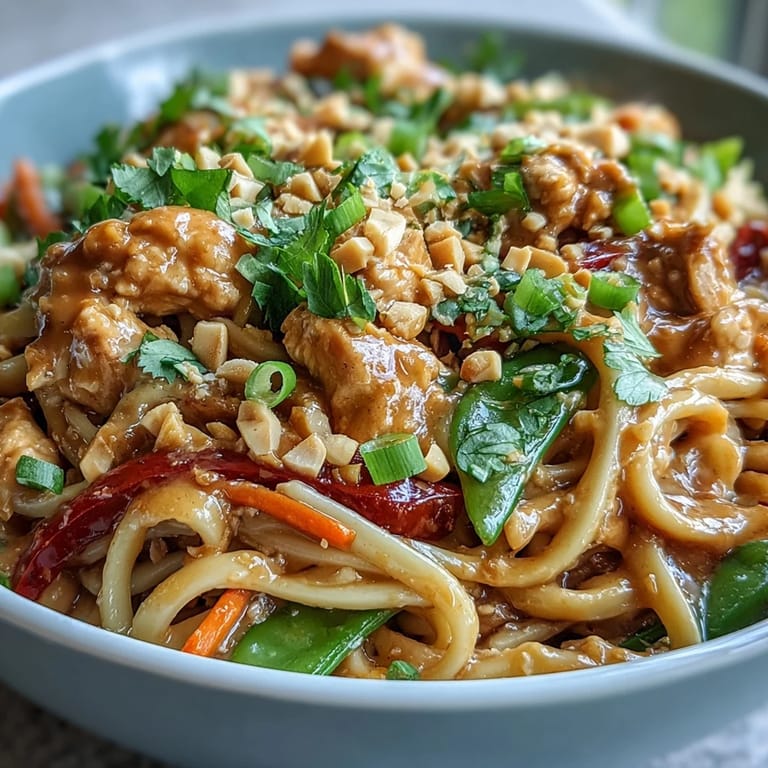
 My mom tried this recipe on a quiet Saturday afternoon and told me later that she'd been thinking about it all week—not because it was complicated, but because it made her feel like she'd cooked something intentional without sacrificing an entire evening to do it. That's when I understood that the real magic isn't in the Thai flavors or the convenience; it's in how this dish respects both your time and your hunger.
The Potsticker Noodle Technique Explained
This method might feel unconventional if you're used to boiling noodles separately, but it's actually brilliant. By adding dry noodles directly to the pan with sauce and vegetables, you're letting them absorb flavor while they soften, which means fewer dishes and a more cohesive final dish where every strand tastes intentional. The key is making sure your liquid is at a gentle simmer and your pan is covered—that traps the steam and cooks the noodles evenly without drying them out.
Customizing Your Sauce to Your Taste
This sauce is forgiving in the best way. If you like things spicier, start by doubling the sriracha and tasting as you go. If the sauce feels too thick before serving, thin it with a splash of broth or water. If you want it less sweet, use less honey—remember that the lime juice at the end will brighten everything and make sweetness less noticeable, so don't overcompensate.
Making It Your Own
The beauty of this dish is how adaptable it is to what you have on hand and what you're craving. Ground turkey or crumbled tofu work beautifully in place of chicken, and any vegetables that appeal to you—mushrooms, broccoli, bok choy, zucchini—will slot in perfectly. For a gluten-free version, swap tamari for soy sauce and double-check your hoisin sauce labels, since some brands sneak in wheat.
- If you're cooking for someone with a peanut allergy, tahini or almond butter can substitute for peanut butter, though you'll lose some of the signature flavor.
- Leftovers taste excellent cold the next day, though the noodles will have absorbed even more sauce—just add a splash of broth when you reheat to loosen things up.
- This pairs beautifully with a crisp white wine like Riesling, or go full Thai with iced tea sweetened just enough to cool down the heat.
 Merken
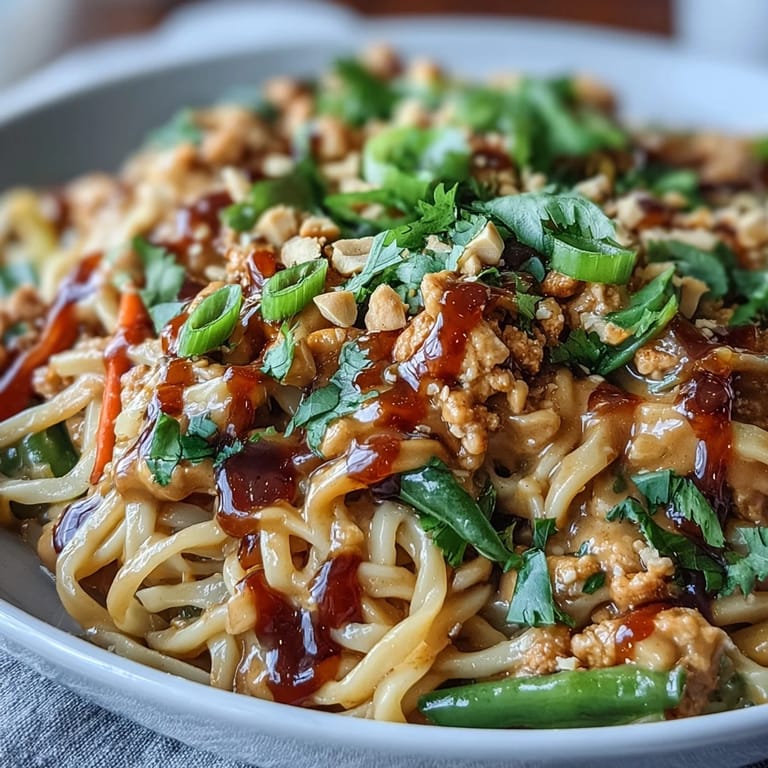
 This recipe has quietly become one of my go-to weeknight dinners because it delivers restaurant-quality flavor without the guilt of takeout, and honestly, that's a gift worth repeating.
Fragen & Antworten zum Rezept
- → Kann ich Hähnchen durch anderes Protein ersetzen?
Ja, halbiertes Putenfleisch oder körniger Tofu funktionieren hervorragend als Alternative. Bereite sie genauso zu wie das Hähnchen.
- → Wie mache ich das Gericht glutenfrei?
Ersetze Sojasauce durch Tamari und wähle eine glutenfreie Hoisin-Sauce. Überprüfe alle Etiketten auf verstecktes Gluten.
- → Wie scharf wird das Gericht?
Mit 1 Teelöffel Sriracha ist es mild bis mittelscharf. Passe die Menge nach persönlichem Geschmack an oder füge Chiliflocken als Garnitur hinzu.
- → Kann ich die Nudeln vorher kochen?
Nein, die Technik funktioniert nur mit trockenen Reisnudeln. Sie garen direkt in der Soße und nehmen so den Geschmack perfekt auf.
- → Wie lange ist das Gericht haltbar?
Im Kühlschrank verschlossen bis zu 3 Tage. Erwärme es portionsweise mit einem Spritzer Wasser oder Brühe, um die Cremigkeit wiederherzustellen.