 Merken
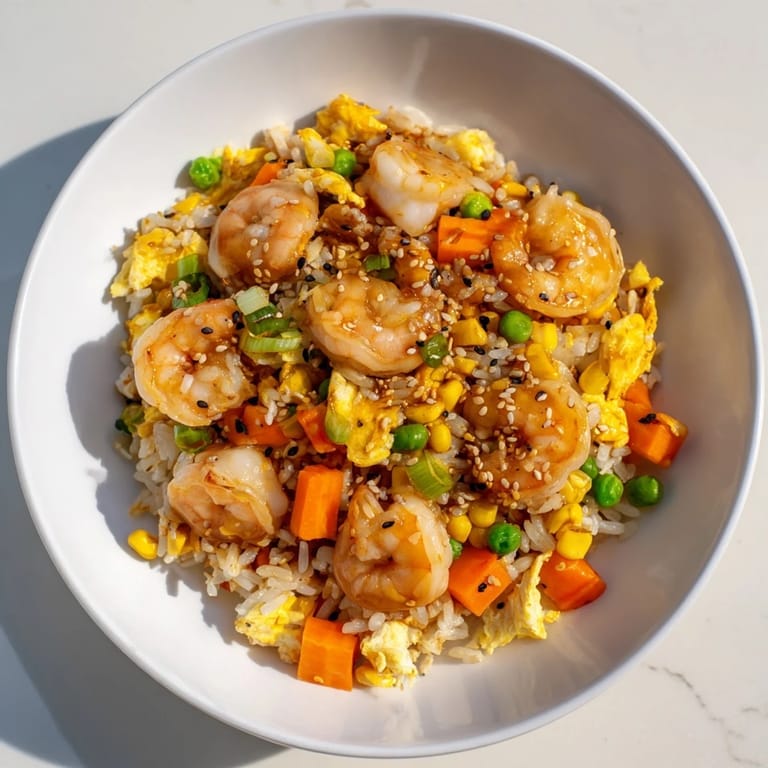
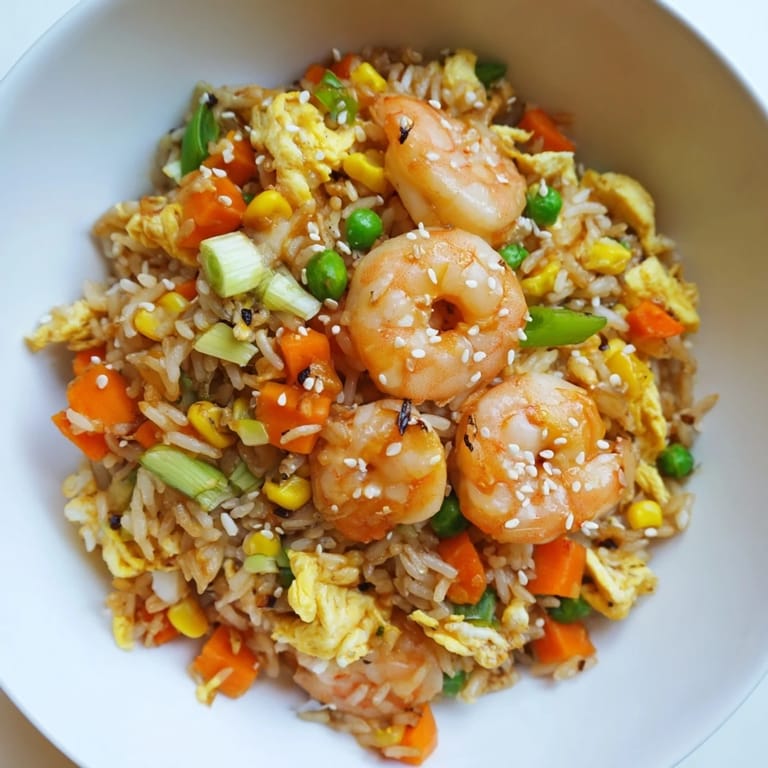
 One Tuesday night when I was tired and hungry, I opened my fridge to find cold rice and frozen shrimp staring back at me. Twenty minutes later, I had dinner on the table that tasted like I'd been cooking all day. That's when I realized fried rice wasn't a technique to master over time—it was just about heat, timing, and not overthinking it.
I made this for my roommate on a night when she'd had the worst day at work, and watching her expression shift from stressed to genuinely happy over a simple bowl of fried rice reminded me that sometimes the best meals are the ones cooked without pretension, just care.
Ingredients
- Medium shrimp, peeled and deveined (200 g / 7 oz): The protein backbone that cooks in seconds and brings a touch of elegance to something so quick.
- Large eggs (2): Beaten and scrambled into silky ribbons that hold the whole dish together.
- Frozen mixed vegetables (100 g / 1 cup): Peas, carrots, and corn do the job of fresh vegetables without the prep work.
- Scallions (2), sliced: Raw and fresh at the end, they cut through the richness and wake up your palate.
- Cooked jasmine rice, chilled (300 g / 2 cups): Day-old rice is crucial—it won't clump and turns crispy at the edges when it hits the heat.
- Soy sauce (2 tbsp): The salt and depth that makes every grain taste intentional.
- Oyster sauce (1 tbsp, optional): A whisper of umami that makes people ask what your secret ingredient is.
- Sesame oil (1 tsp): A small amount goes a long way—it's fragrant and powerful.
- Ground white pepper (1/2 tsp): Gentler than black pepper, it dissolves into the rice without visible specks.
- Vegetable oil (1 tbsp): High heat needs a neutral oil that won't smoke.
Tired of Takeout? 🥡
Get 10 meals you can make faster than delivery arrives. Seriously.
One email. No spam. Unsubscribe anytime.
Instructions
- Get your pan smoking hot:
- Heat the vegetable oil in a large nonstick skillet or wok over medium-high heat until it shimmers and moves like water. This is where the magic starts.
- Cook the shrimp until just pink:
- Add the shrimp and let them sit for 10 seconds before stirring. They'll turn from gray to bright pink in 2 to 3 minutes—don't walk away. The moment they're cooked through, scoop them onto a plate.
- Scramble the eggs in the same pan:
- Pour in the beaten eggs and let them set for a few seconds before pushing them around with a spatula. You want soft, slightly wet curds, not a brown omelet. Push everything to one side when it's just set.
- Warm the vegetables:
- Toss the frozen vegetables into the empty side of the pan and let them thaw and warm for about 1 minute. They'll go from icy to tender.
- Add the rice and break up the clumps:
- Spread the cold rice over the pan and use your spatula to crush any clumps against the hot surface. Stir-fry for 2 minutes until the rice grains separate and start to pick up color on their edges.
- Bring everything together:
- Return the shrimp to the pan and pour in the soy sauce, oyster sauce if using, sesame oil, and white pepper. Toss everything for about 1 minute until the seasonings coat every grain and the shrimp warms through.
- Finish with fresh scallions:
- Scatter the sliced scallions over the top and give it one final toss. Taste a spoonful and adjust salt or sesame oil to your preference.
 Merken
 The first time I made this for someone who claimed they didn't like fried rice, they asked for seconds. Turns out they'd just never had it made with attention to timing and a hot enough pan.
Why Cold Rice Changes Everything
Warm or freshly cooked rice releases steam, and that moisture makes grains stick together in clumps. Cold rice from the fridge or even the freezer is drier and individual—each grain stays separate when it hits the heat. If you're cooking rice specifically for fried rice, spread it on a plate after cooking, let it cool, and refrigerate it uncovered so the air can circulate. You're not just saving time; you're setting yourself up for restaurant-quality texture.
The Heat Matters More Than Skill
I used to think fried rice required years of wok technique, but the truth is simpler: a hot enough pan is 80 percent of the battle. When the oil is shimmering and the pan is screaming hot, everything cooks quickly and the rice picks up color and flavor instead of steaming. If your pan isn't hot enough, your rice will stick, your shrimp will release water, and you'll end up with something closer to rice soup.
Make It Your Own
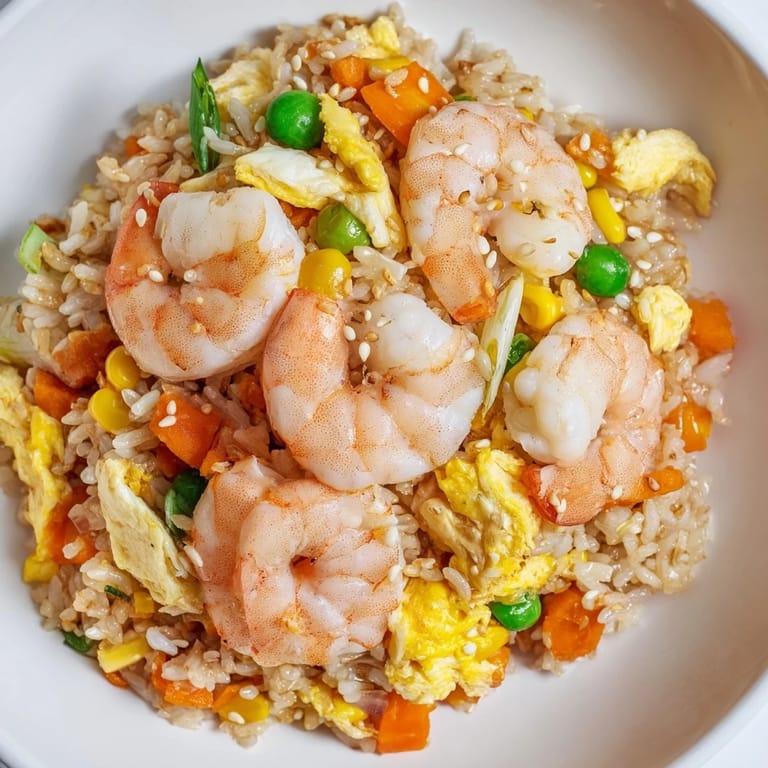
This recipe is a template meant to bend to what you have on hand and what you're craving. Swap the shrimp for leftover rotisserie chicken, crumbled tofu, or leave it out entirely and it works just as well. A drizzle of chili sauce turns it spicy, a squeeze of lime adds brightness, and a fried egg on top makes it feel like brunch.
- Use whatever vegetables you have—leftover broccoli, snap peas, or even cabbage all work beautifully.
- If you don't have oyster sauce, a splash of fish sauce or soy sauce does the job.
- Serve it in bowls with sriracha, hot sauce, or soy sauce on the side so everyone can season to taste.
 Merken
 This meal lives in the space between fridge cleaning and actual cooking, and somehow it's become one of my favorite things to make on nights when I'm tired but hungry. Twenty minutes from cold ingredients to a hot bowl on the table.
Fragen & Antworten zum Rezept
- → Wie vermeidet man, dass der Reis klumpt?
Am besten verwendet man gekühlten, möglichst einen Tag alten Jasminreis. Das verhindert Feuchtigkeit und erleichtert das Braten.
- → Kann man die Garnelen durch andere Zutaten ersetzen?
Ja, Hähnchen, Tofu oder eine vegetarische Variante funktionieren gut und passen geschmacklich.
- → Welche Soßen geben dem Gericht das besondere Aroma?
Sojasauce, Austernsauce und Sesamöl sorgen für eine ausgewogene Würze mit asiatischen Noten.
- → Wie lange dauert die Zubereitung insgesamt?
Das Gericht ist in etwa 20 Minuten fertig – 10 Minuten Zubereitung und 10 Minuten Kochzeit.
- → Welche Beilagen passen besonders gut zu diesem Gericht?
Ein frischer Salat, knackiges Gemüse oder ein leichter Weißwein ergänzen das Gericht perfekt.