 Merken
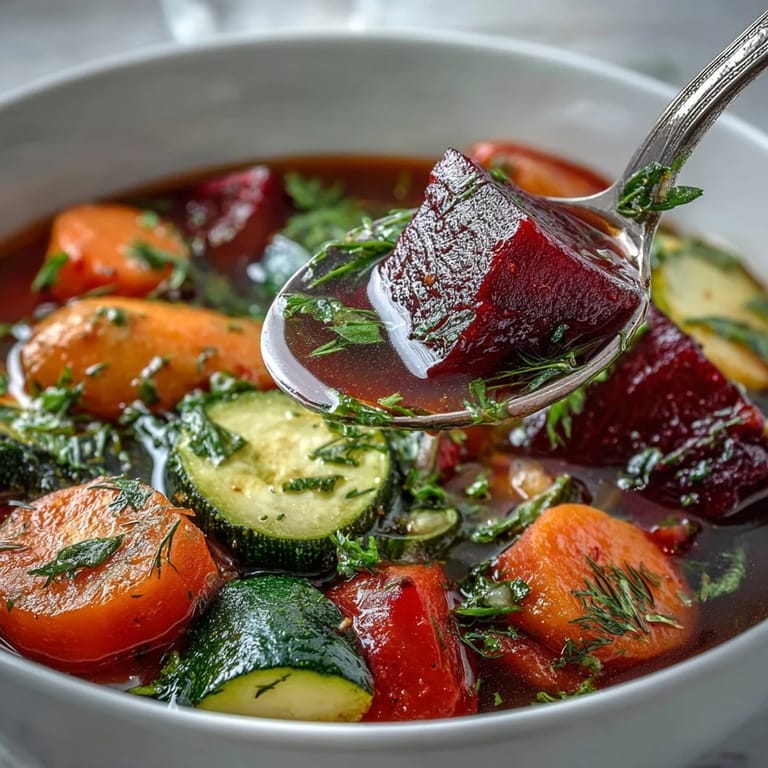
 One afternoon, my kitchen smelled like an entire farmer's market had been invited in—beetroot staining my fingers purple, carrots catching the sunlight on the cutting board. I was experimenting with colors that day, not really following a plan, just pulling vegetables from my crisper drawer and wondering if they'd actually work together in one pot. What emerged was this luminous soup that looked almost too pretty to eat, but tasted even better than it looked.
I made this for my sister during her spring reset phase, and she kept coming back to the pot for more, which told me everything I needed to know. She brought a friend the next day specifically asking if I'd make it again, and that's when I realized this wasn't just a recipe I liked—it was something that made people feel genuinely good.
Ingredients
- 1 medium beetroot, peeled and diced: This is what gives the soup its jewel-like color and subtle earthiness, but peel it under running water or your hands will look like you've been finger-painting.
- 2 medium carrots, peeled and sliced: They add natural sweetness that balances the earthiness, and they soften beautifully into the broth.
- 1 medium courgette (zucchini), diced: This keeps things light and adds a delicate vegetable presence without overpowering anything else.
- 2 medium tomatoes, chopped: Fresh tomatoes bring acidity and brightness that make the whole soup taste alive.
- 1 green bell pepper, diced: It contributes a fresh, slightly sweet flavor and keeps the color palette interesting.
- 1 small red onion, finely chopped: Red onions are milder than yellow ones and add a gentle bite that doesn't need cooking out.
- 2 cloves garlic, minced: Just enough to whisper in the background, not announce itself loudly.
- 1.5 liters (6 cups) vegetable broth (low sodium): The foundation of everything, so choose one you'd actually drink on its own.
- 2 tbsp fresh parsley, chopped: Stir this in at the end so it keeps its brightness and slightly peppery edge.
- 1 tbsp fresh dill, chopped: This is the secret note that makes people pause and wonder what makes this different.
- 1 tbsp fresh basil, chopped: Another finishing touch that adds warmth and herbaceous depth.
- 1 tsp ground black pepper: Freshly ground tastes incomparably better than pre-ground, trust me on this one.
- 1 tsp sea salt (or to taste): You'll adjust this at the very end anyway, so don't go heavy-handed early.
- 2 tbsp olive oil: Use something you actually enjoy the taste of, since it's not being heated to the point where quality doesn't matter.
- Juice of 1/2 lemon: This is what lifts everything and makes the colors seem even more vibrant.
Tired of Takeout? 🥡
Get 10 meals you can make faster than delivery arrives. Seriously.
One email. No spam. Unsubscribe anytime.
Instructions
- Get your aromatics going:
- Heat the olive oil in your largest pot over medium heat and add the red onion and garlic. You'll know they're ready when the kitchen starts smelling irresistible and the onion turns translucent, usually around 2–3 minutes.
- Build the earthiness:
- Add your beetroot and carrots next, stirring them around in the oil for about 5 minutes. They'll start to caramelize slightly at the edges, which is exactly what you want.
- Layer in the brightness:
- Toss in the courgette, tomatoes, and green bell pepper, cooking for another 3–4 minutes until everything smells like a garden came to life. This is when the colors really start to pop.
- Pour and simmer:
- Add your vegetable broth and bring everything to a boil, then immediately turn the heat down to a gentle simmer. Cover the pot and let it bubble away for 20–25 minutes until the vegetables are completely tender and have given themselves over to the broth.
- Finish with intention:
- Stir in your fresh herbs, lemon juice, salt, and pepper all at once. Taste it and adjust—this is your moment to make it exactly right for your palate.
- Serve and garnish:
- Ladle it into bowls while it's still steaming and scatter extra herbs on top if you're feeling fancy. A slice of toasted whole-grain bread alongside makes it feel like a proper meal.
 Merken
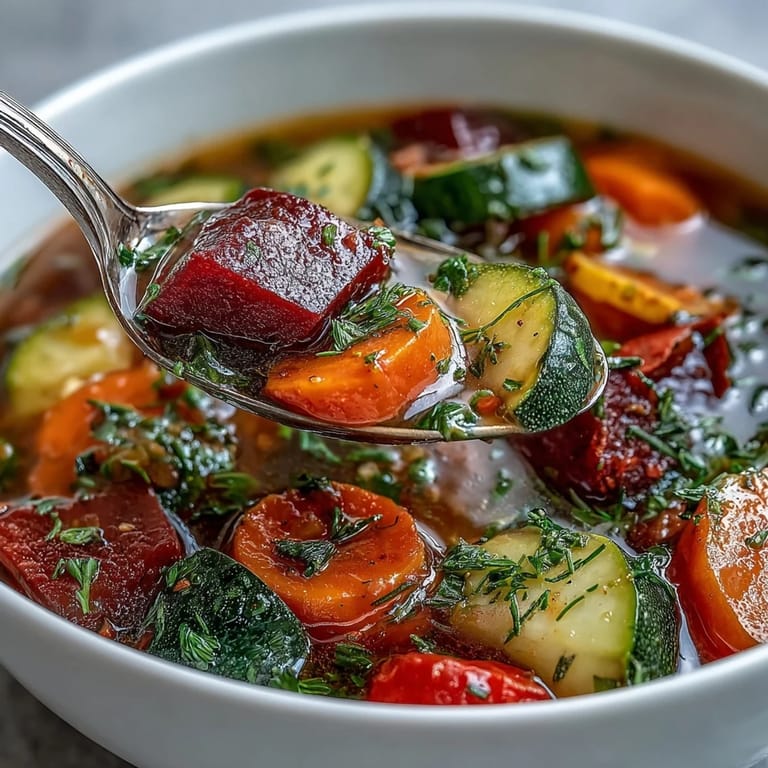
 There's something deeply satisfying about ladling a bowl of soup that contains every color of the rainbow. My nephew called it 'magic soup' because he could see every vegetable floating in there, and somehow knowing what each ingredient was made him more willing to actually eat his vegetables.
When to Prep Ahead
You can chop everything the night before and store it in separate containers, which makes the actual cooking process feel almost meditative. I sometimes do this on a Sunday afternoon and then can have this on the table in under 30 minutes on a random weeknight when I need something nourishing but don't have mental energy for complicated cooking.
Making It Your Own
This soup is genuinely flexible and actually wants you to improvise. Some days I add a handful of spinach at the very end, other times I've thrown in diced sweet potato or white beans for more substance, and it handles everything gracefully without losing its essential character.
Storage and Serving Ideas
This keeps beautifully in the refrigerator for up to four days, and something kind of wonderful happens as it sits—the flavors deepen and marry together. You can reheat it gently on the stove, and it also freezes well if you want to make a bigger batch and stash it away.
- For extra protein and staying power, stir in cooked lentils or chickpeas just before serving.
- If you want a smoother texture, blend a portion of the soup with an immersion blender for a more velvety consistency.
- Serve with crusty bread, a dollop of coconut yogurt, or even a sprinkle of toasted seeds if you want to dress it up.
 Merken
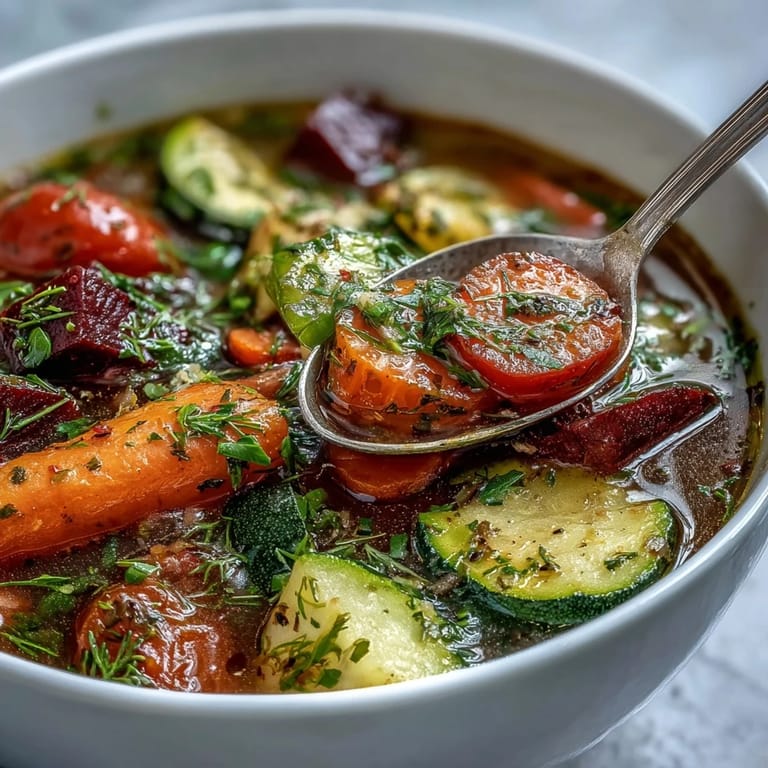
 This soup taught me that the most nourishing meals don't have to feel like punishment or self-denial. Every bowl is a small celebration of color, freshness, and the simple joy of knowing exactly what you're feeding yourself.
Fragen & Antworten zum Rezept
- → Wie lange ist die Suppe im Kühlschrank haltbar?
Die Suppe hält sich verschlossen im Kühlschrank bis zu 4 Tage. Die Aromen entwickeln sich durch das Ziehen sogar weiter intensiv. Vor dem Servieren einfach erwärmen und bei Bedarf mit frischen Kräutern verfeinern.
- → Kann ich die Suppe einfrieren?
Ja, diese Suppe eignet sich hervorragend zum Einfrieren. In luftdichten Behältern portionsweise einfrieren und bis zu 3 Monate lagern. Auftauen bei Raumtemperatur oder langsam im Kühlschrank, dann schonend erwärmen.
- → Welche Gemüsesorten kann ich austauschen?
Das Rezept ist vielseitig anpassbar: Statt Zucchini eignet sich Kürbis, statt Paprika kann Staudensellerie verwendet werden. Auch Süßkartoffeln oder Kohlrabi passen wunderbar. Wichtig ist, härteres Gemüse wie Karotten früher hinzuzufügen als weichere Sorten.
- → Wie erreiche ich eine sämigere Konsistenz?
Für eine cremigere Textur einfach ein Drittel der Suppe vor dem Servieren pürieren und mit dem Rest vermengen. Alternativ eine Kartoffel mitkochen oder etwas Pflanzencreme hinzufügen. Die Variante mit vollständiger Pürierung ergibt eine elegante Veloutésuppe.
- → Ist die Suppe für eine Detox-Kur geeignet?
Perfekt dafür! Die Kombination aus antioxidantienreichem Gemüse und entwässernden Kräutern unterstützt den natürlichen Reinigungsprozess des Körpers. Die leichte Verdaulichkeit und hohe Nährstoffdichte machen sie ideal für Entlastungstage oder Fastenperioden.
- → Was passt gut als Beilage?
Eine Scheibe toastedes Vollkornbrot ergänzt die Suppe hervorragend. Auch ein Klecks veganer Joghurt oder Avocadoscheiben passen wunderbar. Für mehr Protein können gekochte Linsen oder Kichererbsen direkt untergehoben werden.