 Merken
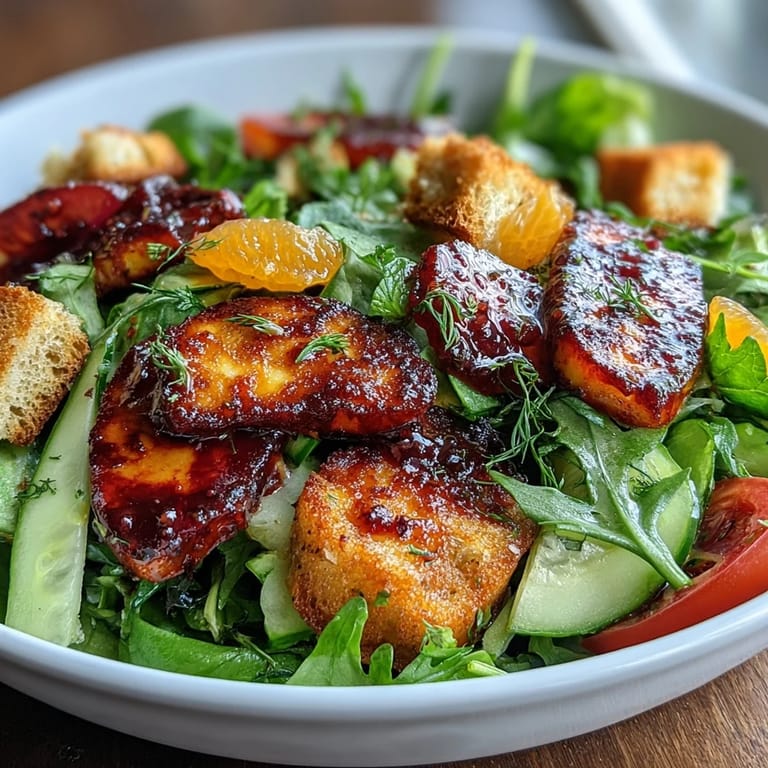
 One Thursday evening, I was standing in my kitchen watching the last of the winter light fade, when my neighbor mentioned she'd just discovered blood oranges at the market. Something about the way she described their deep crimson flesh made me think of Levantine kitchens I'd read about, all that bright acidity paired with warm spices. That night, I found myself building this salad around them, layering golden fried halloumi against those jewel-toned slices, and suddenly dinner felt less like an obligation and more like an adventure on a plate.
I brought this to a potluck last spring, unsure if anyone would appreciate the blood orange and halloumi combination, and watched my friend take a bite and pause mid-chew. She looked at the bowl like it had just explained something she'd been wondering about her whole life. That reaction alone made me realize this salad has a way of surprising people, turning expectations upside down in the best possible way.
Ingredients
- Halloumi cheese, 200 g sliced: This is your anchoring warm element, and it holds its shape beautifully when fried, creating those golden crispy edges without melting into puddles.
- Blood oranges, 2 peeled and sliced: The jeweled color and deeper acidity compared to regular oranges bring a sophisticated tartness that balances the richness of the cheese.
- Mixed salad greens, 200 g (romaine, arugula, parsley, mint): Keep at least half the mix as fresh herbs; they're not just garnish here, they're the flavor backbone of the whole dish.
- Cucumber, 1/2 sliced: Choose one that feels firm and heavy for its size, as watery cucumbers will turn the salad soggy.
- Cherry tomatoes, 200 g halved: Halving them rather than leaving them whole helps them absorb the dressing and releases their juices into the salad.
- Radishes, 4 thinly sliced: These give you that peppery snap and stay crisp even after dressing, which is exactly what you want.
- Red onion, 1 small thinly sliced: The thin slicing is crucial because thick chunks can overpower the other delicate flavors.
- Sourdough bread, 2 thick slices cut into cubes: Day-old sourdough toasts more evenly than fresh, creating croutons that stay crispy rather than getting soggy.
- Olive oil for croutons and frying, 3 tbsp total: Don't skimp on quality here; extra virgin olive oil for the dressing and regular olive oil for cooking keeps costs sensible.
- Extra virgin olive oil, 3 tbsp: This is the dressing's foundation, so choose something you'd taste on its own.
- Fresh lemon juice, 1 tbsp: Always squeeze your own; bottled juice tastes flat and thin by comparison.
- Red wine vinegar, 1 tbsp: This provides the acidic backbone that makes the sumac sing.
- Ground sumac, 1 tsp: It's tangy and slightly fruity, the secret ingredient that makes people ask what makes this salad taste so alive.
- Pomegranate molasses, 1 tsp: A little goes a long way; it adds depth and a subtle sweetness that ties everything together.
- Salt and black pepper to taste: Season gradually as you go, tasting as you build the dressing.
Tired of Takeout? 🥡
Get 10 meals you can make faster than delivery arrives. Seriously.
One email. No spam. Unsubscribe anytime.
Instructions
- Make the croutons first:
- Toss your sourdough cubes with olive oil and salt, spread them on a baking sheet, and bake at 180°C for 8-10 minutes, stirring halfway through. You want them golden and crispy with a slight crunch when you bite down, not pale and chewy.
- Whisk your dressing:
- Combine the olive oil, lemon juice, red wine vinegar, sumac, pomegranate molasses, salt, and pepper in a bowl. Taste as you go; the dressing should be bright and slightly tangy with a whisper of spice underneath.
- Fry the halloumi:
- Heat olive oil in a nonstick skillet over medium heat until it shimmers, then add your halloumi slices. Fry for 1-2 minutes per side until they're golden brown and the edges are crispy but the inside is still soft.
- Assemble the salad base:
- In a large bowl, toss together your greens, cucumber, tomatoes, radishes, and red onion. This is where you build the foundation of freshness that everything else rests on.
- Bring it all together:
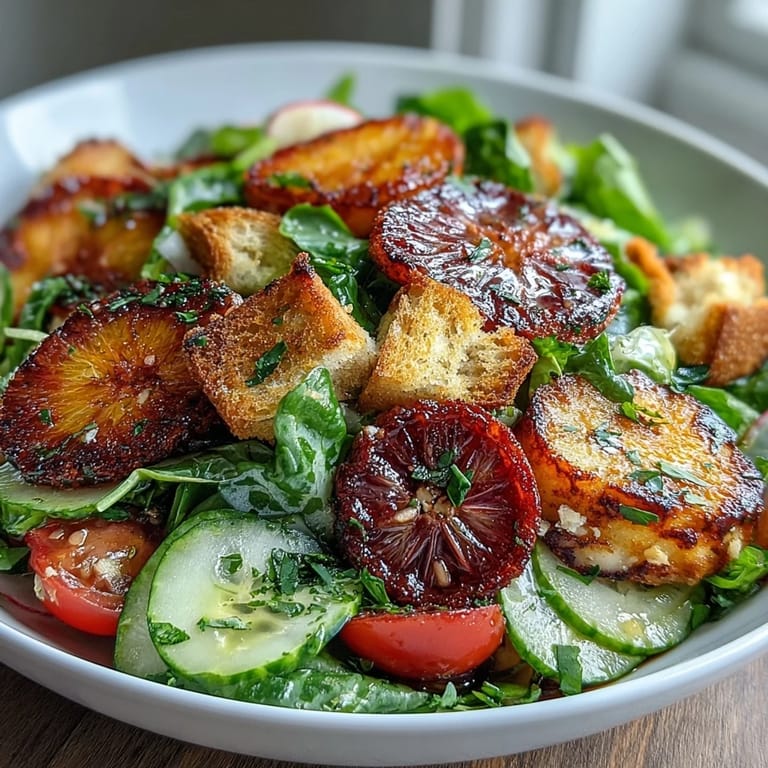
- Add the warm halloumi, blood orange slices, and crispy croutons to your greens, then drizzle with dressing and toss gently. Serve immediately while the halloumi is still warm and the croutons are still crispy.
 Merken
 There's something almost meditative about this salad that I didn't expect when I first made it. The way the warm halloumi contrasts with everything cool around it, the burst of blood orange sweetness against the sumac's subtle tartness—it taught me that a salad doesn't have to be a side dish or an afterthought. It can be the entire point of dinner.
The Magic of Sumac and Pomegranate Molasses
These two ingredients are what elevate this salad from pleasant to memorable. Sumac is bright and lemony without being acidic, while pomegranate molasses adds a rounded, almost grape-juice sweetness that balances the tartness beautifully. Together, they create a flavor profile that feels both familiar and unexpected, grounding the salad in Levantine tradition while letting the modern combination of blood orange and halloumi shine. If you can't find pomegranate molasses, a tiny bit of honey mixed with lemon juice works in a pinch, though the molasses is genuinely worth seeking out at a Middle Eastern grocery or online.
When to Make This Salad
Blood oranges have a short season, usually from December through March, which is when I find myself making this salad most often. But the recipe is flexible enough that you can make it year-round with regular oranges or even thin slices of pink grapefruit if you want to keep that citrus tartness. The real magic isn't locked into one specific fruit; it's in understanding how the components talk to each other—the way warmth plays against cold, how crispy texture survives even after dressing, and why fresh herbs matter more than any fancy technique.
Variations and Swaps
One of the things I love most about this salad is how accommodating it is to improvisation and what you have on hand. You can add pitted olives for briny richness, scatter toasted pine nuts or almonds for crunch, or even toss in some crispy chickpeas if you want extra protein. For a vegan version, grilled tofu or store-bought vegan feta stands in beautifully for the halloumi, soaking up the dressing flavors just as well. The core structure is strong enough that it can handle your additions without losing its identity.
- Try adding fresh pomegranate seeds for a pop of color and juicy sweetness that echoes the pomegranate molasses in the dressing.
- Swap the red wine vinegar for pomegranate vinegar if you find it; it deepens the flavor profile without needing the molasses.
- Use whatever fresh herbs you have on hand, as long as they're bright and aromatic—cilantro, basil, and oregano all work beautifully here.
 Merken
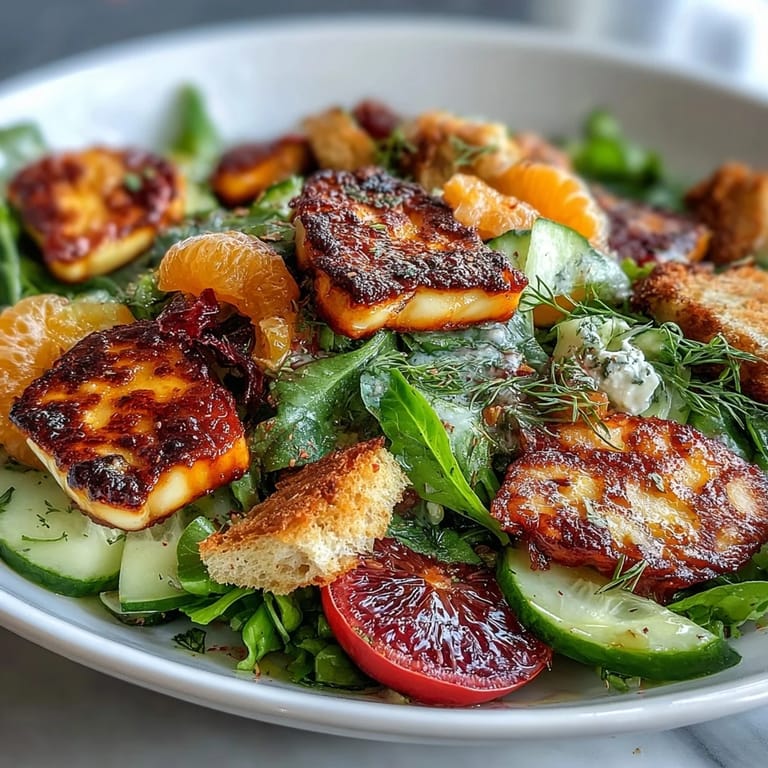
 This salad reminds me that sometimes the simplest meals are the ones that stay with you longest. It's the kind of dinner that makes people linger at the table a little longer than expected.
Fragen & Antworten zum Rezept
- → Was macht Fattoush besonders?
Fattoush ist ein traditioneller libanesischer Salat, der durch knusprige Brotstücke definiert wird. Die Kombination aus frischem Gemüse und gewürztem Brot creates herrliche Texturen.
- → Kann ich Halloumi ersetzen?
Für eine vegane Version eignet sich gegrillter Tofu oder veganer Feta. Beide Alternativen nehmen das Dressing gut auf und liefern die nötige Proteinkomponente.
- → Warum Sumac im Dressing?
Sumac verleiht mit seiner milden Säure und erdigen Note die authentische levantinische Geschmacksrichtung. Es ist ein wesentliches Gewürz für den originalen Charakter dieses Salats.
- → Wie bleibt der Salat knackig?
Das Dressing kurz vor dem Servieren hinzufügen und vorsichtig unterheben. Die warmen Halloumi-Scheiben sollten als letztes hinzugefügt werden, damit sie nicht den ganzen Salat erweichen.
- → Welche Variationen sind möglich?
Granatapfelkerne, entkernte Oliven oder geröstete Nüsse ergänzen das Gericht wunderbar. Statt Sauerteig funktioniert jedes rustikale Brot für die Croutons.
- → Ist dieser Salat vorausschauend zubereitbar?
Das Dressing und Croutons können vorbereitet werden. Halloumi kurz vor dem Servieren anbraten und mit dem frischen Grün kombinieren für beste Ergebnisse.